
Official
Store
Store


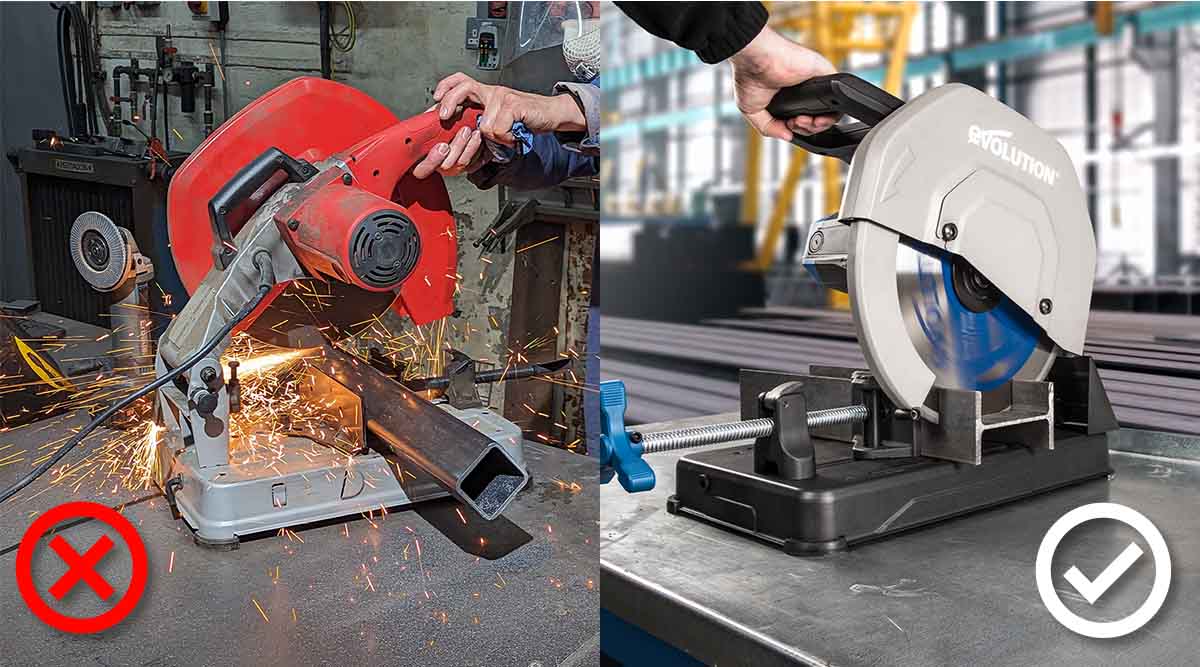
Discover why more fabrication professionals are switching from abrasive cutting to TCT cold cutting technology for faster cuts, cleaner finishes and lower operating costs.

For decades, abrasive chop saws were the go-to choice for cutting steel. They were affordable, familiar and found in workshops and job sites around the world.
But fabrication has evolved.
Today's professionals are under increasing pressure to work faster, improve finish quality, reduce downtime and maximise productivity. Every cut needs to be accurate. Every minute matters.
That's why more fabricators, installers and manufacturers are switching to cold cutting technology.
Unlike traditional abrasive methods, cold cutting uses Tungsten Carbide Tipped (TCT), or Cermet Carbide Tipped blades to shear through metal cleanly and efficiently. The result is faster cutting speeds, reduced finishing work, more consistent performance and a lower cost per cut over time.
In this guide, we'll explore the differences between cold cutting and abrasive cutting, explain how each method works, and look at why cold cutting technology has become the preferred choice for so many metalworking professionals.

Cold cutting is a method of cutting metal using a toothed blade, typically fitted with Tungsten Carbide Tips (TCT) or Cermet Carbide Tips, to shear through the material rather than grind it away.
As the blade rotates, each tooth removes a small amount of material in the form of a metal chip. These chips carry much of the heat generated during the cutting process away from the workpiece, helping to keep the material itself significantly cooler than it would be with abrasive cutting methods.
This principle gives cold cutting its name.
Rather than relying on friction to wear away the material, cold cutting delivers fast, controlled cuts with reduced heat transfer, helping to improve cut quality and reduce the amount of secondary finishing required.
Today, cold cutting technology is used extensively across steel fabrication, mechanical and electrical installation, manufacturing and maintenance applications where speed, accuracy and efficiency are essential.
Key characteristics of cold cutting:
Abrasive cutting has been used in metalworking for decades and remains a familiar sight in workshops and on construction sites. Instead of using teeth to shear through the material, abrasive discs remove metal through friction.
As the disc rotates at high speed, abrasive particles gradually grind away the workpiece. The process generates significant heat, sparks and airborne dust, while the disc itself continuously wears down during use.
Because the disc diameter reduces over time, cutting capacity also decreases. This can affect cutting performance and may require more frequent disc changes to maintain productivity.
Despite these characteristics, abrasive cutting still has a place in certain applications and continues to be used across a variety of industries. However, advances in TCT and Cermet blade technology have led many professionals to reassess whether abrasive cutting remains the most efficient solution for their day-to-day work.

At first glance, both methods achieve the same goal: cutting metal to length. However, the way they achieve it – and the results they deliver – are fundamentally different.
Cold cutting uses a Tungsten Carbide Tipped (TCT) or Cermet Carbide Tipped blade to shear through the material, producing metal chips and transferring less heat into the workpiece. Abrasive cutting relies on friction to wear away the material, generating heat, sparks and dust as the disc gradually reduces in size.
For professionals focused on productivity, finish quality and long-term operating costs, these differences can have a significant impact.
| Feature | Cold Cutting (TCT) | Abrasive Cutting |
| Cutting Method | Shears through the material | Grinds through the material |
| Cutting Speed | Fast efficient cutting | Generally slower |
| Surface Finish | Cleaner cuts with reduced or no burr formation |
Often requires additional finishing |
| Heat Transfer | Reduced heat transferred to the workpiece | Significant heat generation |
| Sparks | Reduced spark generation | Produces substantial sparks |
| Debris | Metal chips | Abrasive dust and debris |
| Blade / Disc Wear | Maintains blade diameter | Disc diameter reduces during use |
| Cutting Capacity | Remains consistent | Decreases as the disc wears |
| Tool Downtime | Fewer blade changes | More frequent disc replacement |
| Cost Per Cut | Often lower over time | Can increase through disc use |
While the right solution ultimately depends on the application, the advantages of cold cutting have contributed to its growing adoption throughout steel fabrication, mechanical and electrical installation, manufacturing and maintenance environments.
In the following sections, we'll explore some of the key reasons why more professionals are making the switch.
Prefer to see the differences in action? Watch this independent comparison between cold cutting and traditional abrasive cutting methods.
Virtually no sparks:
Enhance welding efficiency. Burrs-free, clean cut – straight to weld:
Huge cutting capacity:
At first glance, cold cutting and abrasive cutting may appear to achieve the same outcome: cutting metal to size. However, the differences in how they operate can have a significant impact on productivity, finish quality and overall operating costs.
From faster cutting speeds and cleaner finishes to improved consistency and lower consumable usage, cold cutting technology offers a range of advantages that have helped drive its adoption across fabrication workshops, manufacturing environments and construction sites around the world.
In the following sections, we'll explore some of the key reasons why more professionals are making the switch.
In fabrication, efficiency matters. Whether you're working in a busy workshop or on-site against tight deadlines, the time taken to complete each cut can have a significant impact on overall productivity.
One of the key advantages of cold cutting is speed.
Unlike abrasive discs, which gradually grind through the material, TCT & Cermet blades shear cleanly through the workpiece. This often results in noticeably faster cutting times, helping professionals complete tasks more efficiently.
However, the time savings don't stop once the cut is finished.
Because cold cutting typically produces cleaner cuts with reduced burr formation, less time may be required for secondary finishing operations such as grinding, deburring or preparing material for welding. Over the course of a project – or hundreds of cuts each week – these small efficiencies can quickly add up.
For fabrication professionals, increased productivity doesn't simply mean working faster. It means reducing downtime, streamlining workflows and creating more time for value-adding tasks.
When considering the total time required to cut and prepare steel components, cold cutting technology can offer significant advantages over traditional abrasive methods.

Every additional step in the fabrication process adds time, labour and cost.
Traditional abrasive cutting methods often leave behind burrs, rough edges or discolouration that require further attention before the material is ready for welding, assembly or installation. While these finishing tasks may only take a few minutes per cut, they can become a significant drain on productivity over the course of a project.
Cold cutting technology is designed to minimise this additional work.
By shearing through the material rather than grinding it away, TCT & Cermet blades can produce cleaner, more accurate cuts with reduced burr formation. The result is a finished edge that may require significantly less or no secondary processing before moving on to the next stage of fabrication.
For professionals focused on throughput and efficiency, reducing time spent deburring and reworking components can help improve workflow and free up valuable labour for higher-value tasks.
After all, every minute spent cleaning up a cut is a minute not spent fabricating.

The term "cold cutting" doesn't mean that no heat is generated during the cutting process. Rather, it refers to the way heat is managed.
As a TCT or Cermet blade cuts through steel, each tooth removes a small chip of material. These chips carry much of the heat generated during cutting away from the workpiece, helping to reduce the amount of heat transferred into the material itself.
In contrast, abrasive cutting relies on friction to grind through the workpiece. This process generates significant heat, which is often absorbed by both the material being cut and the surrounding area.
Reduced heat transfer can help minimise heat discolouration, reduce waiting time before handling components and support a more efficient workflow throughout the fabrication process.
For professionals producing multiple cuts throughout the day, these efficiencies can quickly add up.

The initial purchase price of a blade or disc only tells part of the story.
When evaluating cutting solutions, professionals should also consider blade life, consumable replacement frequency, downtime and the labour required to complete the job.
Unlike abrasive discs, which gradually wear away and require regular replacement, TCT & Cermet blades maintain their diameter and cutting profile throughout their service life. This can result in fewer consumable changes and more consistent performance over time.
Independent testing has demonstrated that, in appropriate applications, a single Evolution TCT blade can deliver the equivalent cutting performance of up to 20 abrasive discs.*
For businesses looking to improve efficiency and reduce operating costs, the overall cost per cut may be a more meaningful measure than the upfront cost of the consumable itself.
*Performance will vary depending on material type, application and operating conditions.
To find out how much you could save switching from abrasive to TCT blades visit our cold-cutting calculator here

One of the often-overlooked limitations of abrasive cutting is that the disc diameter reduces as it wears.
As a result, maximum cutting capacity decreases over time, potentially affecting productivity and requiring operators to adapt their working practices or replace discs more frequently.
TCT and Cermet blades work differently.
Because the blade maintains its diameter throughout its service life, cutting capacity remains consistent from the first cut to the last. This predictability can support greater accuracy, simplify setup and provide confidence when working with larger material sections.
For fabrication professionals who rely on repeatability and precision, consistency matters.

Spark generation is an accepted characteristic of abrasive cutting. However, in certain environments, excessive sparks may create additional housekeeping requirements or present operational challenges.
Cold cutting technology typically produces significantly fewer sparks because it relies on shearing action rather than friction to remove material.
While safe working practices should always be followed and appropriate PPE worn, reduced spark generation may contribute to a cleaner and more controlled cutting environment.
This can be particularly beneficial when working indoors, within occupied buildings or in environments where minimising disruption is important.

Abrasive cutting produces a mixture of fine dust, spent abrasive material and metal particles that can accumulate throughout the work area.
Cold cutting produces metal chips instead.
These larger chips are generally easier to collect and dispose of, helping to support housekeeping efforts and maintain tidier workspaces.
While every workshop environment is different, reducing airborne dust and simplifying clean-up can contribute to improved efficiency and a more organised working environment.

Despite the advantages of cold cutting, abrasive cutting still has a place within the industry.
Certain applications, material types or working environments may make abrasive cutting the preferred option, particularly where versatility or lower upfront consumable costs are priorities.
The best cutting solution ultimately depends on the specific requirements of the task at hand.
However, as fabrication professionals increasingly prioritise productivity, finish quality and total operating costs, many are reassessing whether abrasive cutting remains the most effective choice for everyday steel cutting applications.
Understanding the strengths and limitations of both methods allows businesses to make informed decisions based on performance, efficiency and value.

Consumable costs are only one part of the equation.
Labour savings, reduced downtime and fewer disc changes can all contribute to lower operating costs.
Use our calculator to compare the long-term costs of abrasive and cold cutting methods based on your own usage.
Different applications demand different tools. Whether you're cutting structural steel in the workshop or carrying out installation work on-site, there's a cold cutting solution designed for the job.
High-capacity straight cutting for fabrication workshops and production environments.
Explore Chop Saws
Accurate angled cutting for professional fabrication applications.
Explore the S355MCS Gen2
Portable cold cutting performance for installers and mobile professionals.
Explore Circular Saws
From multi-material TCT blades to premium EVOMAX cermet technology.
Explore Metal Cutting Blades
Not sure where to start? Our buying guides can help you choose the right solution for your work.
Understand the differences between our chop saw ranges, from portable multi-material saws through to dedicated fabrication tools, and discover which solution best suits your application.
Read the Chop Saw Buying Guide
Discover how our latest-generation metal cutting mitre chop saw builds on the original with EVOMAX cermet blade technology, an optimised motor system, laser-cut line guidance, enhanced safety features and improved cutting performance.
Explore the S355MCS Gen2 Guide
From compact cordless models designed for installation work through to high-capacity corded saws built for fabrication, this guide explains the key differences to help you choose the right circular saw for your application.
Read the Circular Saw Buying Guide
Cold cutting is a method of cutting metal using a toothed blade, typically fitted with Tungsten Carbide Tips (TCT) and advanced Cermet tips, which shears through the material rather than grinding it away.
During the cutting process, metal chips help carry heat away from the workpiece, reducing the amount of heat transferred into the material compared with abrasive cutting methods.
Are TCT and Cermet blades better than abrasive discs?
Each method has its place. However, many professionals choose TCT and Cermet blades for their ability to deliver faster cuts, cleaner finishes and lower cost per cut in steel fabrication applications.
Cold cutting technology generally produces significantly fewer sparks than abrasive cutting, although appropriate PPE and safe working practices should always be followed.
Do Cold Cutting blades wear down like abrasive discs?
Cold cutting blades gradually wear over time, but they maintain their diameter throughout their service life, helping to provide consistent cutting capacity and predictable performance.
When considering productivity gains, reduced finishing requirements and lower consumable usage, many fabrication professionals find that cold cutting offers strong long-term value.
Blade life depends on the material being cut, operating practices and blade technology used. Under appropriate conditions, cold cutting blades can deliver significantly longer service life than abrasive discs.
In independent testing our TCT blades lasted 20X longer than abrasive, and in internal tests our EvoMax Cermet blades lasted considerably longer than this.
Yes – but blade selection is important
While not all cold cutting blades are designed for stainless steel applications, specialist blades are available that can cut certain grades of stainless steel efficiently and accurately.
Evolution's dedicated stainless steel TCT blades have been developed specifically for this purpose. Explore our range of stainless steel cutting blades to find the right solution for your application.
The right saw depends on your application.
Need maximum workshop capacity? Consider a chop saw.
Need accurate mitred cuts? A metal cutting mitre saw could be the ideal solution.
Need portability? A metal cutting circular saw may be more suitable.
Yes. Abrasive cutting continues to be used successfully across many industries and may remain the preferred option in certain applications. The best cutting method depends on the material, environment and performance requirements of the task.
The demands placed on today's fabrication professionals continue to evolve.
Speed matters. Efficiency matters. Finish quality matters.
While abrasive cutting still has a place in certain applications, advances in cold cutting technology have changed what's possible in modern metalworking.
For businesses looking to improve productivity, reduce downtime and maximise the value of every cut, cold cutting offers a compelling alternative.
Metal cutting has evolved.
The question isn't whether cold cutting works.
It's whether your current cutting process is working as hard as it could be.
Explore Evolution's cold cutting solutions


Discover how magnetic drills and annular cutters deliver faster, cleaner, and more accurate hole ...
September 30, 2026

Building a pickle! See how Ruth Amos, Colin Furze & Evolution teamed up to build a giant pick...
September 23, 2026

Mark Marshall and Evolution travel to Chicago to transform Ms Giles’s neglected backyard into a p...
August 25, 2026

Choosing the right Chop saw shouldn’t be guesswork. Take a look at our guide on what to consider ...
July 31, 2026

Discover why more fabrication professionals are switching from abrasive cutting to TCT cold cutti...
July 31, 2026

Why move the material when you can move the saw? Discover how Evolution's innovative Metal Cutti...
July 22, 2026

Metal fabrication covers anything from intricate metal art, creating sturdy bridge girders, to tr...
July 08, 2026

A three-day garden transformation that became something far more meaningful. Follow Zoe’s story a...
April 27, 2026

Cutting concrete and masonry is never a "one size fits all" job. Whether you’re trying to keep th...
April 02, 2026

Concrete cutting puts serious demands on your tools. We break down the differences between disc c...
February 24, 2026

A rebrand isn’t just about how things look. It’s about how they feel - to the people who use them...
February 18, 2026

You might notice something different about us. We’re excited to reveal a fresh new look and an am...
February 04, 2026

Our motto says it all: “One saw, one blade, cuts all.” Let’s dive into what makes our multi-mater...
December 16, 2025

A staple saw for both trade professionals and DIY enthusiasts tool kits, we dive into the circula...
December 11, 2025

A simple and colourful DIY project - learn how to build a three-tier hanging indoor planter using...
November 26, 2025

A quick and stylish DIY project that will modernise the look of your room - learn how to easily i...
November 20, 2025

Our experts go back to basics on how to use a circular saw. This beginner's guide includes what a...
November 20, 2025

We show you how to transform your living space with this easy DIY radiator cover project. In this...
November 15, 2025

November 13, 2025

Build a stylish DIY sofa table using Evolution cordless tools. Ruth shows you how to create a pra...
November 13, 2025

August 26, 2025

Owning a table saw can revolutionise your workshop and any serious woodworker or DIY’er will even...
July 23, 2025

The R260DCT-Li isn’t just another cordless disc cutter—it’s a serious tool for serious trades. In...
July 11, 2025

We teamed up with Liam & Nici from Two Houses Into One to show you how to build a garden fort...
July 10, 2025

Build a DIY wooden teepee for kids using decking boards and CLS timber. A beginner-friendly outdo...
June 11, 2025

Ready to turn your garden into a creative outdoor play space? This Kids Mud Kitchen project is th...
June 09, 2025

Build a sturdy mini picnic bench for kids with this beginner-friendly DIY guide. Step-by-step ins...
June 03, 2025

May 15, 2025

When you put the new R260DCT-Li Battery Powered Cordless Disc Cutter up against some of the bigge...
April 28, 2025

Whether you’re a seasoned professional or a DIY enthusiast, choosing the right disc cutter can gr...
April 24, 2025

Looking for the perfect disc cutter? Whether you're cutting bricks, concrete, metal, or stone, ch...
March 04, 2025

Construction and building specialist, Chris Smith (Chris the Builder), gives us a step-by-step gu...
March 02, 2025

Vikkie Lee shows us the steps to build your own garden shed with ease using Evolution Power Tools.
February 27, 2025

Woodworker, DIYer and Designer, Hannah Ashton (HKA Create) shows us how to build a garden trellis...
January 27, 2025

Create your own beautiful and durable outdoor wooden bench with this easy step-by-step guide by f...
November 01, 2024

September 06, 2024

March 07, 2024

March 04, 2024

September 06, 2023

August 02, 2023
 Mitre Saws
 Table Saws


 Circular Saws
 Chop Saws
 Reciprocating Saws
 Disc Cutters / Concrete Saws
 Jigsaws

 Compactors / Wacker Plates

 Magnetic Drills

 Paddle Mixers
 Sanding Equipment


 Mag Drill Cutters


