
Official
Store
Store


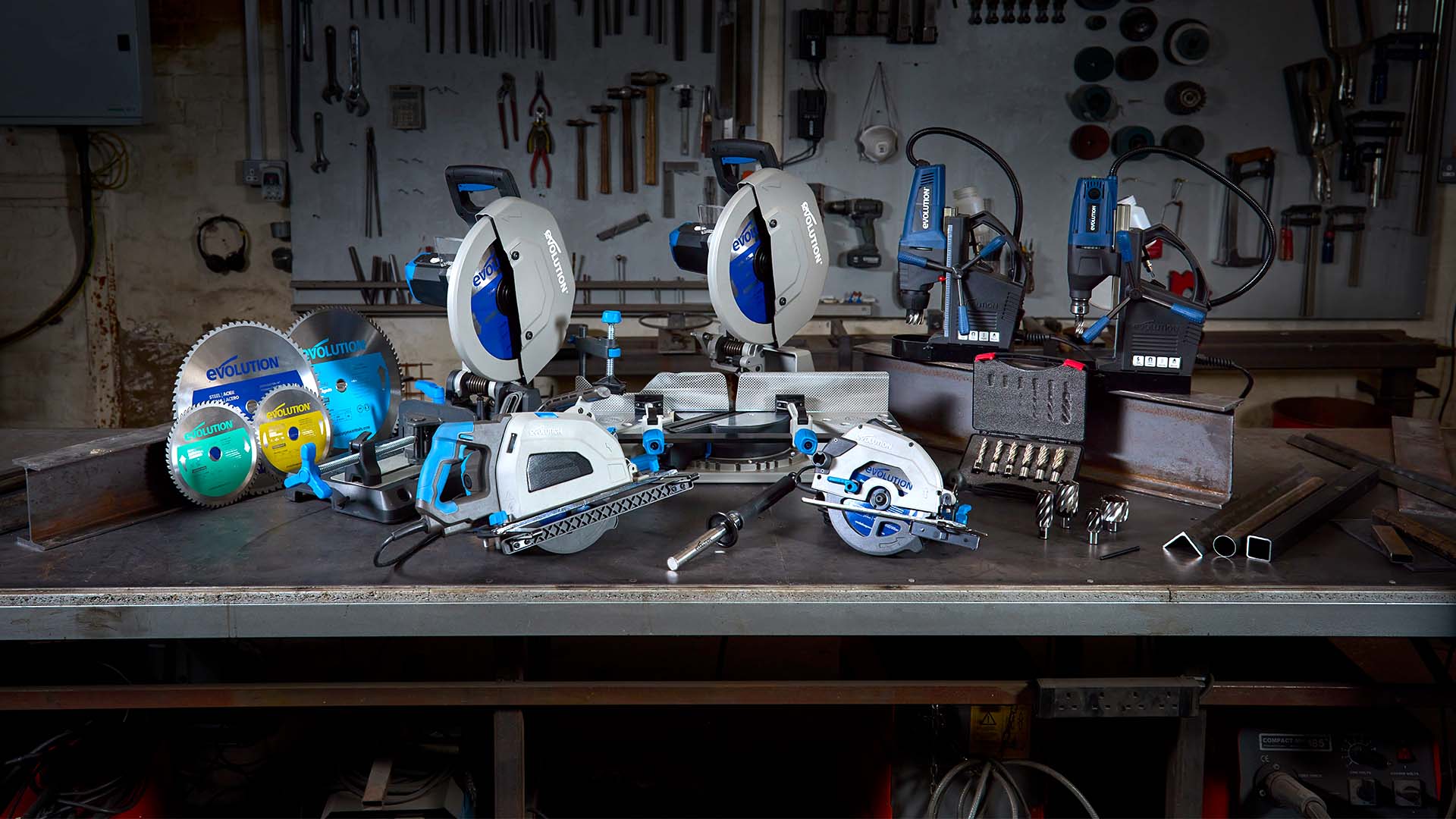
Metal fabrication covers anything from intricate metal art, creating sturdy bridge girders, to transforming sheets of metal into a car chassis. We look at metal fabrication in more detail, and the specialised tools you'd expect to see in a Fabricators workshop.

What slows down an experienced Fabricator is not the physical side of the task but the constant need to rework materials.
Time lost to deburring jagged edges, correcting blade deflection, and constantly repositioning material for complex angles is where profit and patience disappear in metal working. While the fundamentals of cutting, bending, and assembling sheet and structural metal haven't changed, the technology handling the material has.
Whether you’re a seasoned professional or an enthusiastic hobbyist, we’ll go through all you need to know, and the tools available to make your metal working easier.
Contents:
Metal fabrication - mostly applied in sheet metal work - is the process of manipulating metals by cutting, stamping, folding, forming, rolling, bending or otherwise moulding them into specific shapes.
While automated metal fabrication is widespread and is used to produce an endless supply of metal shapes and parts for a wide array of industries - including areas like manufacturing, IT, medical and more.
Manual metal fabrication is still a common career, a highly skilled, yet physically demanding profession. It includes those who create bespoke furniture, garden sculptures, architectural features (such as gates and railings) and much more. These skilled specialists utilise a rock-steady hand, years of fabrication experience and, of course, the right metal fabrication tools to produce unbelievably precise work.

There are many different processes involved with metal fabrication, the first step being a carefully planned design to determine the materials, cuts and tolerances required.

This is the process of cutting raw materials, be it sheet metal, metal bars or plates. There are a few ways of cutting, these include:
Once metal is cut, it may need to be formed into shape. Typically tools for this can be used for:
Joining the pieces of metal together to create the final piece.

This could be adding a high shine, buffing the materials smooth or creating a certain finish.
There are a vast amount of tools used in metal fabrication, we’ve mentioned some of the more industrial types when discussing processes, but what tools should you have at hand in a metal working workshop?
We designed the Evolution range not just to cut metal, but to eliminate the secondary steps that slow down your workshop.
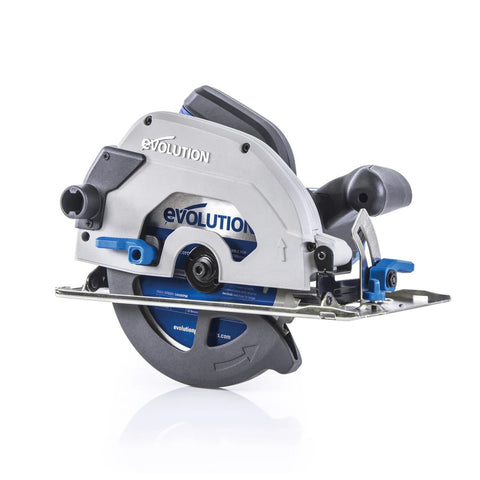
A common power tool in woodworking, circular saws offer the freedom to cut large materials by hand to the exact size and shape required. Their powerful motors and large rotating blades make them significantly faster than tools such as jigsaws when making long, straight cuts.
Metal cutting circular saws are far more than just woodworking saws fitted with a different blade. Purpose-designed for the demands of metal fabrication and paired with specialist TCT blades, they provide the control, performance, and cut quality needed to work efficiently with a wide range of metals.
They are particularly well suited to cutting sheet metal, steel plate, box section, angle iron, steel stud, cable tray, and Unistrut, making them a versatile addition to any workshop or jobsite. Unlike stationary cutting equipment, a circular saw allows you to take the tool to the material, providing greater flexibility when working with large or awkward components.
This versatility makes metal cutting circular saws popular with a wide range of trades and industries, including steel fabricators, welders, electrical installers, HVAC engineers, mechanical contractors and general construction professionals. They are equally valuable to serious DIY enthusiasts undertaking renovation projects that involve working with metal.
Evolution's range of metal cutting circular saws includes both corded and cordless options, with selected models also compatible with guide rails and track systems for enhanced accuracy on long cuts.
To achieve the best results, it’s important to match the blade to the material being cut. Evolution offers a range of premium metal cutting blades, each engineered to maximise performance on specific materials including mild steel, stainless steel, aluminium and thin sheet steel. Choosing the right blade not only improves cut quality but can also enhance blade life and cutting efficiency.
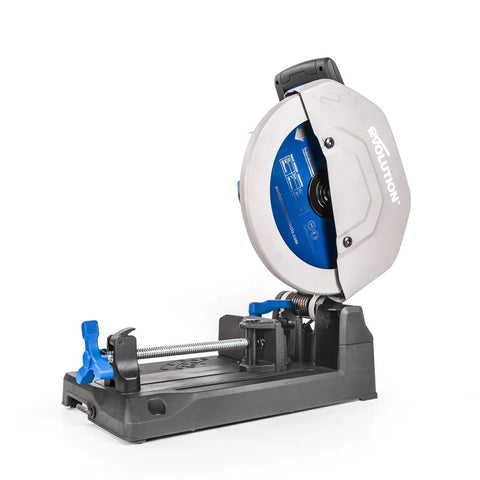
A metal cutting chop saw combines the cutting performance of a circular saw with the stability and repeatability of a stationary machine. Material is secured against a fence while the saw head is lowered through the workpiece, allowing for quick, controlled cuts.
Unlike handheld cutting tools, chop saws are designed for high-volume, repeatable cutting. Their fixed base and clamping systems provide greater stability and accuracy, helping fabricators produce consistent results while reducing set-up time.
Modern TCT metal cutting chop saws also offer significant advantages over traditional abrasive saws, delivering faster cuts with less heat, fewer sparks and reduced burring, meaning components often require less finishing before moving on to the next stage of fabrication.
Metal cutting chop saws excel at processing a wide range of materials commonly used in fabrication. From box section, angle iron and flat bar to steel tube, pipe, channel and structural sections, they provide the capacity and cutting performance needed to prepare stock material quickly and accurately. Their ability to make fast, repeatable cuts makes them particularly valuable when working on projects that involve multiple pieces or consistent dimensions.
Metal cutting chop saws are a staple in fabrication workshops and industrial environments where productivity and precision are essential. They are widely used by steel fabricators, welders, gate and railing manufacturers, agricultural engineers, and maintenance professionals who need a reliable way to process metal efficiently. They are equally valuable to skilled DIY users and small workshop owners tackling larger metalworking projects, offering professional-quality results without the complexity of more industrial cutting equipment.
Evolution's chop saw range has been developed to meet the needs of everyone from serious DIY users to professional fabricators. Our collection includes versatile multi-material models capable of cutting steel, aluminium, wood and plastics. There are dedicated mild steel chop saws engineered for demanding workshop environments, and cordless options that bring the benefits of cold-cutting technology to site-based applications. For those requiring greater flexibility when producing angled cuts, our metal-cutting mitre chop saw range provides enhanced precision and repeatability for more complex fabrication tasks.
In fabrication, consistency is just as important as speed. The ability to produce accurate, repeatable cuts quickly can have a significant impact on productivity, particularly when preparing multiple components for assembly or welding. A dedicated metal cutting chop saw helps reduce rework, improve fit-up and keep projects moving efficiently from one stage to the next.
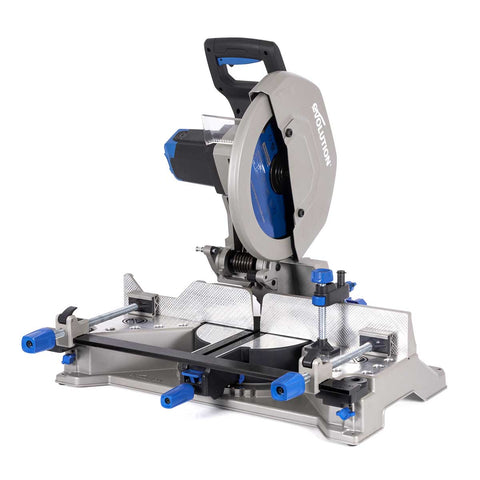
A metal-cutting mitre chop saw combines the cutting power and capacity of a traditional chop saw with the added capability to make accurate mitre cuts at a wide range of angles. Unlike standard chop saws, which typically require the workpiece to be repositioned to achieve angled cuts, a mitre saw allows the saw head or base to adjust, making it easier to produce precise, repeatable joints for more complex fabrication work.
In fabrication, accuracy is everything. Producing frames, supports, gates, railings and structural components often requires multiple cuts at varying angles, and even small inconsistencies can create problems during assembly. Metal-cutting mitre chop saws are designed to streamline this process, reducing set-up time while improving repeatability and precision.
Evolution has been at the forefront of this category, developing dedicated TCT metal-cutting mitre saws that allow fabricators to cut quickly and accurately without the compromises associated with adapting equipment designed for other applications. By combining industrial cutting performance with adjustable mitre functionality, these saws help workshops improve efficiency while maintaining the high standards of workmanship that professional fabrication demands.
Metal-cutting mitre chop saws are ideally suited to fabricating box section, angle iron, tube, pipe, flat bar and structural steel components that require precise mitred joints. They excel when producing frames, gates, railings, workbenches, support structures and architectural metalwork, where accuracy and consistency are critical to achieving a professional finish.
These saws are particularly valued by professional fabricators, welding specialists, metal furniture makers and businesses producing bespoke or small-batch metalwork. They are equally at home in workshops manufacturing gates and railings, agricultural equipment or structural assemblies, where the ability to produce repeatable angled cuts can significantly reduce fabrication time and improve overall fit-up during welding and assembly.
Evolution's metal-cutting mitre saw range has been specifically developed for the demands of steel fabrication. Models such as the S355MCS-Gen2 fitted with a cermet carbide EVOmax blade, combine heavy-duty construction with adjustable cutting functionality, allowing professionals to tackle complex fabrication tasks with confidence and consistency.
The ability to produce accurate mitre cuts efficiently can have a significant impact on productivity. Reducing the need for repeated measuring, repositioning and reworking allows fabricators to spend less time correcting errors and more time building. For workshops where precision, speed and repeatability are essential, a dedicated metal-cutting mitre chop saw can quickly become one of the most valuable tools on the shop floor.

While saws are designed to make fast, accurate cuts, angle grinders excel at the jobs that happen before and after cutting. They can remove weld spatter, prepare edges for welding, smooth rough surfaces and cut materials in situations where a larger stationary saw would be impractical. Cordless models add an extra level of flexibility, allowing fabricators to work safely and efficiently around large assemblies, on-site installations or in workshops where unrestricted movement is essential.
Angle grinders are commonly used for cutting metal stock, grinding welds flush, bevelling edges prior to welding, removing rust and coatings, deburring sharp edges and cleaning metal surfaces in preparation for finishing. With the appropriate accessory fitted, they can tackle a broad range of fabrication tasks across mild steel, stainless steel and other metals.
Few tools are as universally used in fabrication as the angle grinder. It is relied upon daily by welders, steel fabricators, maintenance engineers, agricultural mechanics and construction professionals, while also proving invaluable to DIY users undertaking metalworking projects at home. Its versatility means it often becomes one of the hardest-working tools in any workshop.
As part of Evolution's expanding cordless metalworking range, the S125AGR-Li Cordless Angle Grinder has been developed specifically with fabricators in mind. Featuring a powerful brushless motor, electronic brake, tool-free guard adjustment and compatibility with the EXT battery platform, it delivers the performance and convenience demanded by modern fabrication environments.
Fabrication rarely ends once the cut has been made. Preparing materials correctly before welding and achieving a high-quality finish afterwards are essential to producing professional results. A dependable angle grinder allows fabricators to move efficiently between these stages, helping improve both productivity and the quality of the finished work.

Surface finishing tools are designed to improve the appearance, consistency and quality of metal surfaces. Unlike traditional angle grinders that can be used for finishing metal which use rigid abrasive discs, surface finishing tools use interchangeable drums that follow the contours of the material, allowing them to refine and prepare surfaces without aggressively removing material.
While angle grinders excel at cutting and heavy material removal, they can leave uneven scratch patterns that require additional work to correct. Surface finishing tools are specifically designed to create controlled, consistent finishes across large areas and complex shapes. They allow fabricators to blend welds, remove oxidation, prepare surfaces for coating and achieve decorative finishes with greater precision and control.
This makes them particularly valuable when appearance matters just as much as structural integrity, helping reduce rework and improving the quality of the finished product.
Surface finishing tools can be used to remove discolouration around welds, blend weld seams, smooth imperfections, prepare materials for painting or powder coating, and create uniform brushed finishes on stainless steel and other metals. By selecting different drums, users can move seamlessly from more aggressive surface preparation to fine finishing and polishing applications.
These tools are popular with stainless steel fabricators, architectural metalworkers, metal furniture manufacturers and workshops producing visible or decorative metalwork where the final appearance is critical. They are also increasingly used by general fabricators looking to improve efficiency and consistency during the finishing stage of production.
Evolution's cordless Surface Finishing Tool has been developed to bring greater flexibility to this often overlooked stage of fabrication. Compatible with a range of interchangeable drums for stripping, finishing and polishing applications, it allows users to tailor the tool to the task at hand while benefiting from the convenience of cordless operation as part of the EXT battery platform.
The finishing stage is often what separates acceptable work from exceptional craftsmanship. A high-quality finish can improve the appearance, durability and perceived value of a fabricated product. Having the right finishing tool allows fabricators to achieve professional results more efficiently, helping them deliver projects that look as good as they perform.

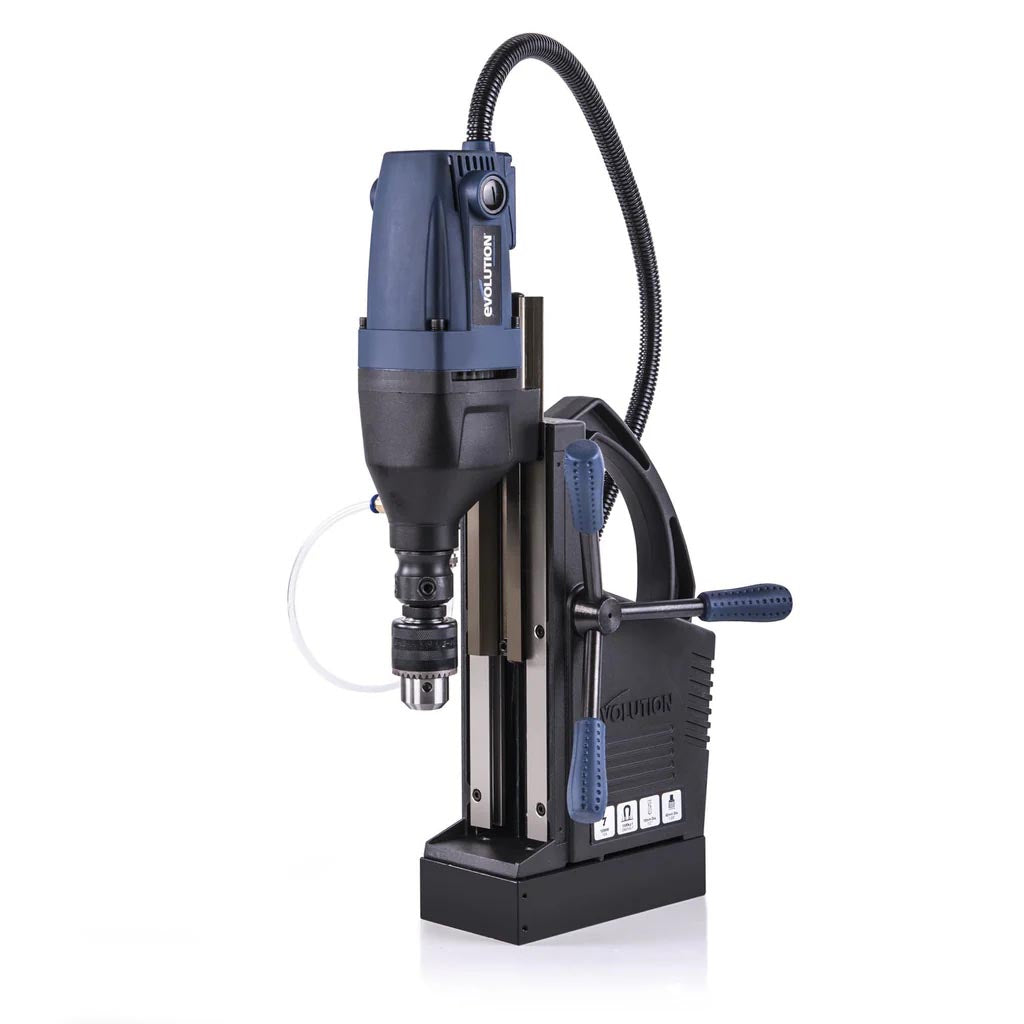
Magnetic drills are portable drilling machines designed specifically for creating accurate holes in metal. Using a powerful electromagnetic base to secure the drill to the workpiece, they provide the stability and precision of a pillar drill while offering the flexibility to work directly on large steel sections and structures.
Unlike conventional handheld drills, magnetic drills are engineered for demanding metalworking applications where accuracy, repeatability and efficiency are essential. Their magnetic base helps minimise movement during operation, allowing fabricators to produce clean, precise holes with greater confidence, even when working on vertical surfaces or large structural components that cannot easily be moved to stationary equipment.
Magnetic drills are commonly used to create holes for bolts, fasteners, and structural connections in steel beams, plate and other heavy-duty metal sections. When paired with annular cutters, they can produce larger diameter holes more quickly and efficiently than traditional twist drills, making them particularly valuable in fabrication and construction environments.
Magnetic drills are widely used by steel fabricators, structural steel erectors, engineers, maintenance teams, and construction professionals who require accurate hole-making capabilities both in the workshop and on-site. Their portability and performance make them an indispensable tool wherever drilling large or precise holes in metal is part of the job.
Evolution's magnetic drill range has been developed to deliver professional drilling performance in a compact and portable format. Combined with our range of annular cutters, they provide fabricators with a practical solution for fast, efficient hole-making across a variety of applications.
Accurate holes are critical to successful assembly. Whether installing fasteners, connecting structural members or preparing components for further fabrication, having the right drilling equipment helps improve efficiency, reduce rework and ensure parts fit together exactly as intended.
If you'd like to learn more about how magnetic drills work, the benefits of annular cutters and how to choose the right setup for your application, explore our dedicated guide to magnetic drills and annular cutters.
When selecting tools for your workshop, quality is key. At Evolution, our metal working tools have been engineered for the use and environment they are intended for, with precision, safety, accuracy and quality of build at the forefront of each tool.
If you’re building a metal shop from the ground up, or just adding to your existing workshop, we have the essential tools, blades and accessories to take your work or your project from the first step to the very last in our Fabrication collection.


Discover how magnetic drills and annular cutters deliver faster, cleaner, and more accurate hole ...
September 30, 2026

Building a pickle! See how Ruth Amos, Colin Furze & Evolution teamed up to build a giant pick...
September 23, 2026

Mark Marshall and Evolution travel to Chicago to transform Ms Giles’s neglected backyard into a p...
August 25, 2026

Choosing the right Chop saw shouldn’t be guesswork. Take a look at our guide on what to consider ...
July 31, 2026

Discover why more fabrication professionals are switching from abrasive cutting to TCT cold cutti...
July 31, 2026

Why move the material when you can move the saw? Discover how Evolution's innovative Metal Cutti...
July 22, 2026

Metal fabrication covers anything from intricate metal art, creating sturdy bridge girders, to tr...
July 08, 2026

A three-day garden transformation that became something far more meaningful. Follow Zoe’s story a...
April 27, 2026

Cutting concrete and masonry is never a "one size fits all" job. Whether you’re trying to keep th...
April 02, 2026

Concrete cutting puts serious demands on your tools. We break down the differences between disc c...
February 24, 2026

A rebrand isn’t just about how things look. It’s about how they feel - to the people who use them...
February 18, 2026

You might notice something different about us. We’re excited to reveal a fresh new look and an am...
February 04, 2026

Our motto says it all: “One saw, one blade, cuts all.” Let’s dive into what makes our multi-mater...
December 16, 2025

A staple saw for both trade professionals and DIY enthusiasts tool kits, we dive into the circula...
December 11, 2025

A simple and colourful DIY project - learn how to build a three-tier hanging indoor planter using...
November 26, 2025

A quick and stylish DIY project that will modernise the look of your room - learn how to easily i...
November 20, 2025

Our experts go back to basics on how to use a circular saw. This beginner's guide includes what a...
November 20, 2025

We show you how to transform your living space with this easy DIY radiator cover project. In this...
November 15, 2025

November 13, 2025

Build a stylish DIY sofa table using Evolution cordless tools. Ruth shows you how to create a pra...
November 13, 2025

August 26, 2025

Owning a table saw can revolutionise your workshop and any serious woodworker or DIY’er will even...
July 23, 2025

The R260DCT-Li isn’t just another cordless disc cutter—it’s a serious tool for serious trades. In...
July 11, 2025

We teamed up with Liam & Nici from Two Houses Into One to show you how to build a garden fort...
July 10, 2025

Build a DIY wooden teepee for kids using decking boards and CLS timber. A beginner-friendly outdo...
June 11, 2025

Ready to turn your garden into a creative outdoor play space? This Kids Mud Kitchen project is th...
June 09, 2025

Build a sturdy mini picnic bench for kids with this beginner-friendly DIY guide. Step-by-step ins...
June 03, 2025

May 15, 2025

When you put the new R260DCT-Li Battery Powered Cordless Disc Cutter up against some of the bigge...
April 28, 2025

Whether you’re a seasoned professional or a DIY enthusiast, choosing the right disc cutter can gr...
April 24, 2025

Looking for the perfect disc cutter? Whether you're cutting bricks, concrete, metal, or stone, ch...
March 04, 2025

Construction and building specialist, Chris Smith (Chris the Builder), gives us a step-by-step gu...
March 02, 2025

Vikkie Lee shows us the steps to build your own garden shed with ease using Evolution Power Tools.
February 27, 2025

Woodworker, DIYer and Designer, Hannah Ashton (HKA Create) shows us how to build a garden trellis...
January 27, 2025

Create your own beautiful and durable outdoor wooden bench with this easy step-by-step guide by f...
November 01, 2024

September 06, 2024

March 07, 2024

March 04, 2024

September 06, 2023

August 02, 2023
 Mitre Saws
 Table Saws


 Circular Saws
 Chop Saws
 Reciprocating Saws
 Disc Cutters / Concrete Saws
 Jigsaws

 Compactors / Wacker Plates

 Magnetic Drills

 Paddle Mixers
 Sanding Equipment


 Mag Drill Cutters


