
Official
Store
Store


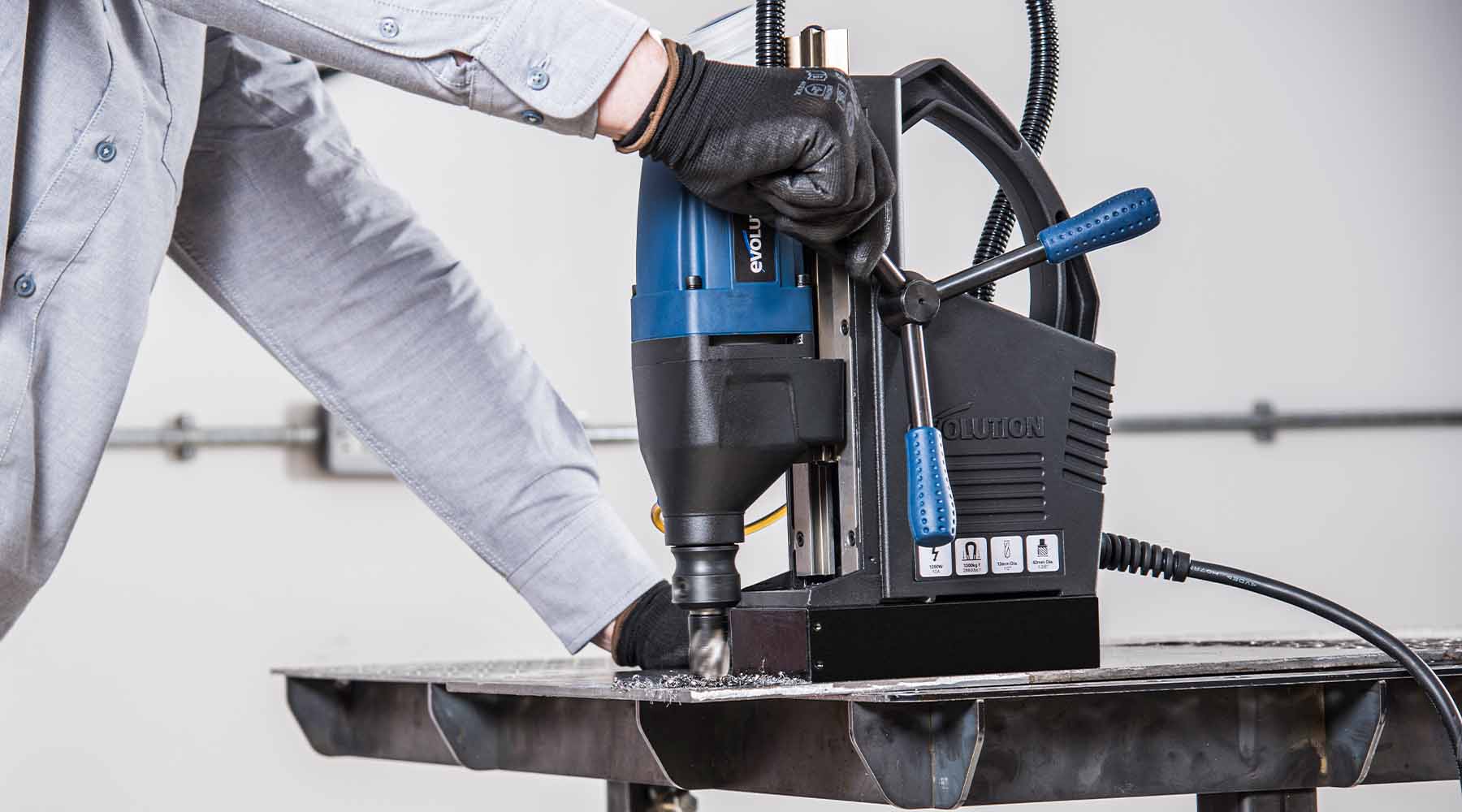
Discover how magnetic drills and annular cutters deliver faster, cleaner, and more accurate hole making in steel fabrication. This guide explains how mag drills work, where they’re used, and why cutter choice plays such an important role in drilling performance, finish quality, and on-site productivity.

When it comes to steel fabrication, accurate hole making is critical. Whether you’re working with structural steel, heavy plate, box section, or fabricated assemblies, clean and precise holes help improve fit-up, reduce rework, and speed up installation both on-site and in the workshop.
For many fabrication professionals, magnetic drilling systems have become one of the most efficient ways to achieve accurate, repeatable drilling in steel. Combined with annular cutters, mag drills allow fabricators to produce larger diameter holes faster, cleaner, and with greater control than conventional handheld drilling methods.
In this guide, we’ll explain what magnetic drills are, how annular cutters work, and why they’ve become an essential tool across steel fabrication, construction, and engineering industries.
A magnetic drill, often called a mag drill, is a portable drilling machine designed specifically for drilling into steel and metal surfaces.

Unlike a conventional handheld drill, most mag drills use an electromagnetic base to secure itself directly onto the workpiece. This creates a stable drilling platform capable of producing accurate and repeatable holes in structural steel, heavy plate, beams, and fabricated assemblies.
By holding the drill firmly in position, mag drills help eliminate the wandering and sway often associated with handheld drilling. The result is straighter holes, improved accuracy, and greater consistency, particularly important in fabrication environments where poor alignment can lead to costly rework further down the line.
Because the drill attaches directly to the steel surface, mag drills can be used in locations where traditional workshop machinery would be impractical - including installed steelwork, vertical surfaces, overhead applications, and site-based fabrication environments.
Portable mag drills are commonly used in:
For smaller holes and lighter-duty applications, handheld drills still have their place. But when accuracy, repeatability, and larger diameter drilling become important, mag drills offer several major advantages.
The magnetic base securely attaches the drill directly to the steel surface, helping reduce movement during drilling. This allows operators to achieve more accurate hole placement and consistent results, particularly in larger fabrication projects where alignment matters.
Mag drills are designed for larger diameter drilling applications commonly found in fabrication and structural steelwork. Combined with annular cutters, they can produce holes far more efficiently than conventional twist drilling methods.
Rather than moving heavy steel sections back to fixed workshop equipment, fabricators can bring the drill directly to the workpiece. This makes mag drills ideal for site work, installed steel, gantries, I-beams, and large fabricated structures.
The drill performs the cutting operation from a stable mounted position, reducing the physical effort required compared to handheld drilling, especially during repetitive drilling applications.
Many magnetic drills feature integrated coolant systems that deliver coolant directly to the cutter throughout the drilling process. This helps reduce heat build-up, improve cutting performance, and extend cutter life without the need for repeated manual application.

An annular cutter is a specialist metal cutting tool designed for use with magnetic drills.
At first glance, annular cutters can look similar to a hole saw, but they are engineered specifically for precision drilling in steel and metal fabrication applications.
Unlike a traditional twist drill, which removes the entire volume of material from the hole, an annular cutter removes only the material around the outer edge of the cut. This leaves behind a solid slug at the centre of the hole.
This cutting method provides several important advantages:
For fabrication professionals drilling repetitive holes in steel, annular cutters can significantly improve both productivity and finished hole quality.
Both annular cutters and twist drills have their place in metalworking, but they are designed for different applications.
| Feature | Annular Cutter | Twist Drill |
| Hole Size Capability | Excellent for larger holes | Better for smaller holes |
|
Cutting Speed |
Faster in steel | Slower in larger diameters |
| Operator Effort | Lower | Higher |
| Hole Finish | Reamed-quality finish | Often requires additional finishing |
| Heat Build-Up | Reduced | Higher |
| Material Removal | Cuts outer edge only | Removes full material volume |
| Best For | Structural steel & Fabrication | General drilling, small diameters |
For larger holes in steel fabrication, annular cutters are often the preferred solution due to their speed, efficiency, and cleaner finished results.
Choosing the correct cutter length can improve both drilling performance and finish quality.
Short cutters are commonly used for:
Long cutters are better suited for:
Matching the cutter to the material thickness and application helps maximise cutting performance and tool life.
Achieving accurate and repeatable holes depends on more than just the drill itself. The complete drilling system, including cutter condition, coolant use, and machine setup all contribute to final results.


When selecting a mag drill, key considerations include:
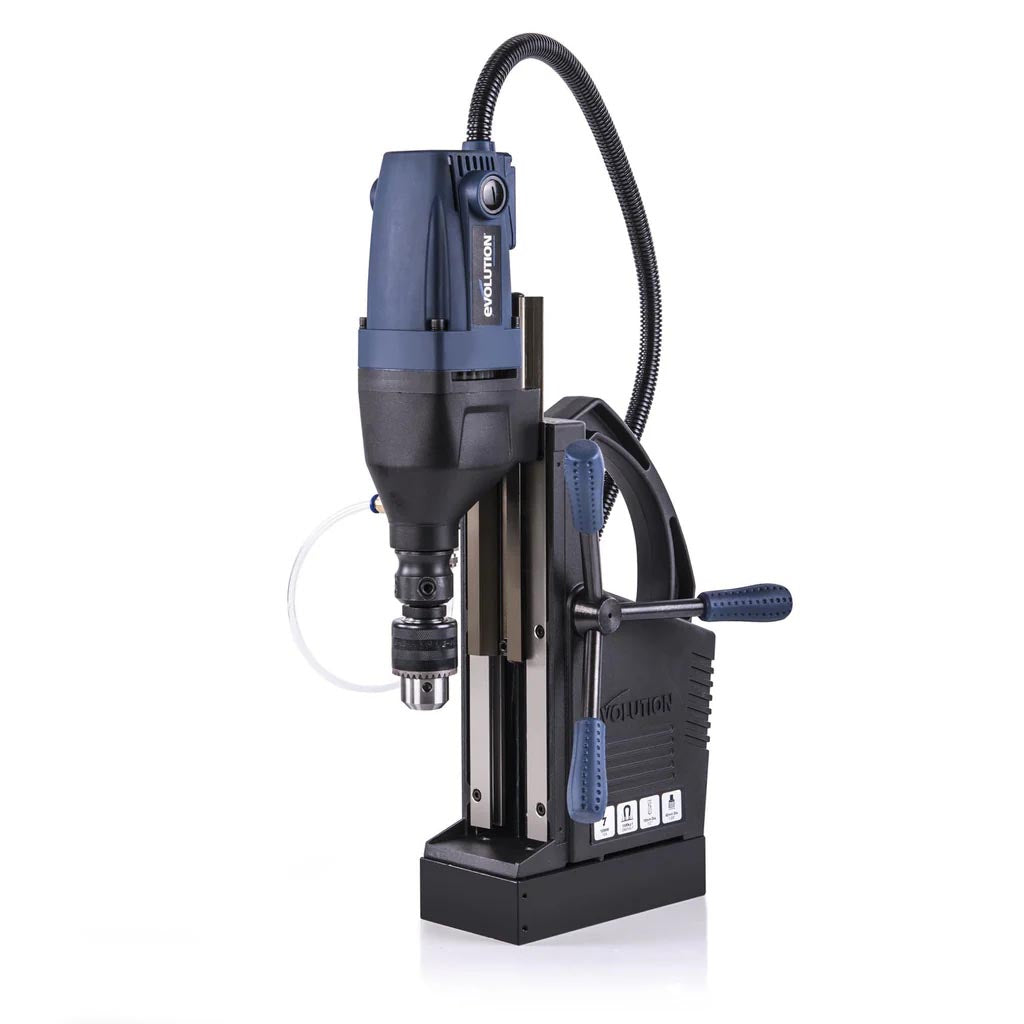
Evolution’s magnetic drill range includes portable site-ready models designed for steel fabrication and engineering applications.
The compact S28MAG provides drilling capacity up to 28mm, while the EVOMAG42 increases cutter capacity up to 42mm for heavier-duty fabrication tasks. Both feature powerful 1200W motors, 1300kg magnetic adhesion, integrated coolant systems, and smooth dovetail slide mechanisms for controlled drilling performance.
To complement the machines, Evolution also offers a range of premium annular cutter kits in both short and long configurations for clean, accurate steel drilling across a wide variety of fabrication applications.
Yes. Magnetic drills are commonly used on vertical steel sections, beams, and installed structural steelwork, provided the material thickness is suitable for magnetic adhesion.
Most mag drills require sufficient steel thickness for the magnet to achieve full holding force. Always follow the manufacturer’s recommendations.
For larger diameter holes in steel fabrication, annular cutters are generally faster, cleaner, and more efficient than twist drills.
Yes. Many magnetic drills can also use twist drills with the correct chuck and accessories.
Coolant helps reduce heat build-up, improve cutting performance, and extend cutter life during drilling.
As fabrication professionals continue to demand greater portability, precision, and efficiency from their equipment, magnetic drilling systems remain one of the most effective solutions for accurate hole making in steel.
By combining machine stability, cutter performance, coolant management, and operator control, mag drills and annular cutters help fabricators achieve fast, clean, and repeatable results across workshop and on-site fabrication environments.


Discover how magnetic drills and annular cutters deliver faster, cleaner, and more accurate hole ...
September 30, 2026

Building a pickle! See how Ruth Amos, Colin Furze & Evolution teamed up to build a giant pick...
September 23, 2026

Mark Marshall and Evolution travel to Chicago to transform Ms Giles’s neglected backyard into a p...
August 25, 2026

Choosing the right Chop saw shouldn’t be guesswork. Take a look at our guide on what to consider ...
July 31, 2026

Discover why more fabrication professionals are switching from abrasive cutting to TCT cold cutti...
July 31, 2026

Why move the material when you can move the saw? Discover how Evolution's innovative Metal Cutti...
July 22, 2026

Metal fabrication covers anything from intricate metal art, creating sturdy bridge girders, to tr...
July 08, 2026

A three-day garden transformation that became something far more meaningful. Follow Zoe’s story a...
April 27, 2026

Cutting concrete and masonry is never a "one size fits all" job. Whether you’re trying to keep th...
April 02, 2026

Concrete cutting puts serious demands on your tools. We break down the differences between disc c...
February 24, 2026

A rebrand isn’t just about how things look. It’s about how they feel - to the people who use them...
February 18, 2026

You might notice something different about us. We’re excited to reveal a fresh new look and an am...
February 04, 2026

Our motto says it all: “One saw, one blade, cuts all.” Let’s dive into what makes our multi-mater...
December 16, 2025

A staple saw for both trade professionals and DIY enthusiasts tool kits, we dive into the circula...
December 11, 2025

A simple and colourful DIY project - learn how to build a three-tier hanging indoor planter using...
November 26, 2025

A quick and stylish DIY project that will modernise the look of your room - learn how to easily i...
November 20, 2025

Our experts go back to basics on how to use a circular saw. This beginner's guide includes what a...
November 20, 2025

We show you how to transform your living space with this easy DIY radiator cover project. In this...
November 15, 2025

November 13, 2025

Build a stylish DIY sofa table using Evolution cordless tools. Ruth shows you how to create a pra...
November 13, 2025

August 26, 2025

Owning a table saw can revolutionise your workshop and any serious woodworker or DIY’er will even...
July 23, 2025

The R260DCT-Li isn’t just another cordless disc cutter—it’s a serious tool for serious trades. In...
July 11, 2025

We teamed up with Liam & Nici from Two Houses Into One to show you how to build a garden fort...
July 10, 2025

Build a DIY wooden teepee for kids using decking boards and CLS timber. A beginner-friendly outdo...
June 11, 2025

Ready to turn your garden into a creative outdoor play space? This Kids Mud Kitchen project is th...
June 09, 2025

Build a sturdy mini picnic bench for kids with this beginner-friendly DIY guide. Step-by-step ins...
June 03, 2025

May 15, 2025

When you put the new R260DCT-Li Battery Powered Cordless Disc Cutter up against some of the bigge...
April 28, 2025

Whether you’re a seasoned professional or a DIY enthusiast, choosing the right disc cutter can gr...
April 24, 2025

Looking for the perfect disc cutter? Whether you're cutting bricks, concrete, metal, or stone, ch...
March 04, 2025

Construction and building specialist, Chris Smith (Chris the Builder), gives us a step-by-step gu...
March 02, 2025

Vikkie Lee shows us the steps to build your own garden shed with ease using Evolution Power Tools.
February 27, 2025

Woodworker, DIYer and Designer, Hannah Ashton (HKA Create) shows us how to build a garden trellis...
January 27, 2025

Create your own beautiful and durable outdoor wooden bench with this easy step-by-step guide by f...
November 01, 2024

September 06, 2024

March 07, 2024

March 04, 2024

September 06, 2023

August 02, 2023
 Mitre Saws
 Table Saws


 Circular Saws
 Chop Saws
 Reciprocating Saws
 Disc Cutters / Concrete Saws
 Jigsaws

 Compactors / Wacker Plates

 Magnetic Drills

 Paddle Mixers
 Sanding Equipment


 Mag Drill Cutters


